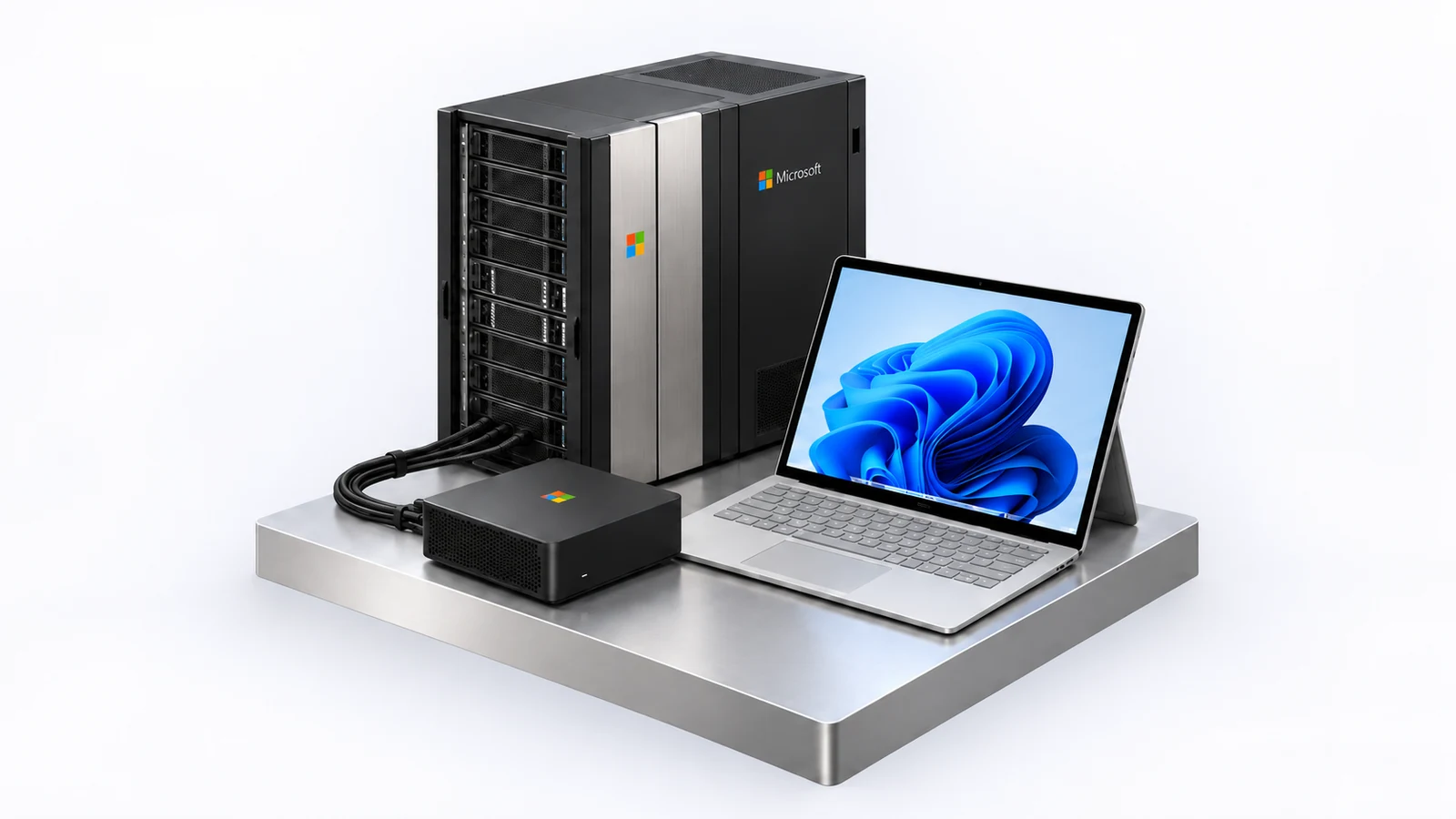
Growth increasingly depends on delivering complete systems
NVIDIA's growth is extending a chip business into a more complex computing-systems business. Customers need GPUs, but also networking, software, cooling and clusters they can put to work. A more valuable system can increase revenue per deployment. A longer delivery chain also makes inventory, customer collections and supplier commitments harder to coordinate.
The profitability reported in FY2027 Q2 demonstrates the appeal of this model. The next questions concern its durability: how much pricing power the platform can retain, how much capital expansion consumes, and whether customers earn enough from their infrastructure to support another investment cycle. I consider these questions more informative than revenue growth alone.
Income-statement figures below cover the quarter ended July 26, 2026. Cash-flow figures cover the six months ending on that date. First-half cash is compared with first-half earnings, not one quarter's profit.
What the margins reveal about platform value
| Quarterly measure | FY2027 Q2 |
|---|---|
| Revenue | $96.221 billion |
| Gross profit | $72.142 billion |
| Operating income | $63.734 billion |
| Net income | $59.688 billion |
| Gross margin, calculated | Approximately 75.0% |
| Operating margin, calculated | Approximately 66.2% |
The figures come from the consolidated income statement in NVIDIA's Form 10-Q. Operating income includes research and selling expenses. Net income also reflects non-operating results and tax, so its movement cannot be treated as a direct measure of hardware competitiveness.
Platform pricing is easier to understand through the customer's deployment economics. Established software tools, a developer ecosystem and networking capabilities can reduce the engineering effort required to move, train and deploy models. If the combination improves utilization, customers compare more than the purchase price of a chip: they also consider engineering time, operating efficiency and deployment delays.
These are plausible commercial reasons for a premium, not separately quantified contributions to reported profit. More complex systems also require costly memory, packaging, interconnects and cooling. Whether higher selling prices cover those costs depends on product mix, yields and delivery efficiency. This quarter's margin does not establish the profitability of every future architecture.
Investment gains and working capital explain different parts of cash conversion
First-half net income was $118.010 billion, against operating cash flow of $74.421 billion, a conversion ratio of approximately 63.1%. The gap is not a measure of unpaid revenue and cannot all be attributed to customer collections.
The cash-flow reconciliation includes a $23.707 billion deduction for equity-security gains, $24.590 billion absorbed by receivables and $10.204 billion absorbed by inventory. Depreciation, stock compensation and changes in operating liabilities also affect the result.
Investment appreciation can raise accounting earnings without producing the same amount of cash from computing-product sales. Receivables reflect the interval between recognized sales and payment; inventory represents resources committed before a sale is completed. These mechanisms should be examined separately.
Receivables and inventory commonly grow during rapid expansion. The concern becomes more substantial if they persistently outpace the business or if payment terms, customer concentration, inventory composition and provisions deteriorate. A days-sales-outstanding estimate based only on a period-end balance and one quarter's revenue is sensitive to timing. It cannot, by itself, establish customer financial distress.
Securing supply creates obligations ahead of demand
Without advance supply arrangements, NVIDIA may lose deliveries. Excess commitments can leave costs behind when demand changes. Competition therefore takes place through balance-sheet decisions as well as product performance.
The company reported $279 billion of supply and capacity commitments across multiple fiscal years. This is neither cash already spent in the quarter nor a single quarter's future expense. The note also explains that some arrangements can be canceled, rescheduled or adjusted before firm orders, potentially at additional cost. Source: commitments and contingencies in the Form 10-Q.
The significance is the scale of resources configured for future delivery. When demand materializes, those arrangements support revenue. When customers defer deployments or architectures change faster than expected, inventory and payment schedules may become misaligned. Timing, flexibility and provisions matter more than treating the entire commitment as debt or an inevitable loss.
Customers must turn installed compute into economic returns
Better systems do not eliminate the work between hardware delivery and profitable use. Power availability, cluster deployment, model services and application revenue each introduce a possible delay. Hardware sales and the customer's ultimate return can move on different schedules.
Large cloud operators can fund long investment periods from existing businesses. Emerging compute providers may depend more heavily on financing, utilization and a small number of contracts. Combining them into one measure of AI demand obscures differences in purchasing durability. The useful questions are whether systems enter service, remain occupied and generate enough revenue to cover power, leases, depreciation and financing.
Custom silicon presents another test. Its ability to take specific workloads depends on migration costs, performance, availability and total ownership costs. Competition could pressure pricing in some applications while the overall market expands. That possibility deserves analysis without assuming that NVIDIA's platform advantage must disappear.
Valuation rests on both platform economics and hardware cycles
High earnings do not automatically make a business inexpensive. A high multiple does not settle the opposite case either. Valuation requires assumptions about the duration of growth, sustainable margins, working capital and the reinvestment needed to remain competitive.
A reverse discounted-cash-flow exercise can show what a price requires the company to achieve. It is highly sensitive to starting cash flow, discount rates and terminal growth. Annualizing a period with concentrated deliveries or large investment gains can create false precision. A model describes relationships among assumptions; it does not independently verify value.
For NVIDIA, the central question is how platform economics coexist with hardware cyclicality. Software and system integration support a premium. Component costs, customer budgets and product transitions still create fluctuations. The advantage matters if it continues to produce cash through those fluctuations.
What would strengthen or weaken the case
- Margins and product mix: whether pricing and delivery efficiency cover memory, packaging and architecture transitions, with unusual inventory adjustments identified separately.
- Receivables, inventory and cash: whether working-capital requirements remain proportionate to growth, using matching periods and disclosed payment conditions.
- Supply obligations and deployment: whether commitments mature in step with customer demand and the availability of operational data centers.
- Customer economics under competition: whether performance and ecosystem benefits become lower deployment costs and higher utilization in practice.
NVIDIA has demonstrated the earning power of its computing platform. I am watching whether that advantage continues to generate cash after the supply-chain and customer payback cycles are taken into account.
Sources and measurement
Figures refer to the reporting periods specified above. Interpretations of competitive advantage and future business conditions are analysis, not company guidance.